Hail Reports in Pueblo, Colorado — Last 90 Days
NOAA Storm Prediction Center logged 3 hail reports within 25 miles of Pueblo across 2 storm days, most recently on September 9, 2026. Source: SPC Local Storm Reports (preliminary, may be revised).
Data as of October 24, 2026 (last successful NOAA check). The newest report in the feed is from Oct 23, 2026. The 90-day log is SPC preliminary data. The county history (2017 to June 2026) is the NOAA Storm Events archive, 2014–June 2026; it has no storms after it ends.
- 2.00 inlargest hail near the city, last 90 days (golf ball size)
- 55days with hail 1 in or larger in the county, 2014–June 2026
- 41days with 58+ mph thunderstorm wind, 2014–June 2026
- #13 of 209among the cities we cover, by hail days of 1 in or more
Has hail hit my Pueblo roof since it was installed?
County-level hail reports for Pueblo from the NOAA archive this page uses; a county report is not proof of damage at your Pueblo address.
When does hail hit Pueblo?
NOAA NCEI Storm Events, county level, 2014–June 2026
If insurance covers it, what do I pay in Pueblo?
Only if the claim is approved. The ACV math is a straight-line example over a 25-year life; insurers writing Pueblo policies use their own schedules, so check your policy.
Request Sent!
A local contractor will reach out as soon as they review your request.
Hail near Pueblo in the last 90 days
- 2.00 inLargest hail in 90 days (golf-ball size)
- 2Hail days near Pueblo
- 3SPC reports
- September 9, 2026Most recent event
Around Pueblo, the NOAA Storm Prediction Center logged 3 hail reports within 25 miles between August 19 and September 9, 2026, spread over 2 storm days. Both days brought stones of 1″ or more, and 1 of the 3 Pueblo reports with coordinates fell within 10 miles of the city center. In a typical year Pueblo sees about 7 hail-producing storms, which is why insurers price separate wind-and-hail deductibles in this market.
Pueblo's storm-climate context
Pueblo's semi-arid climate delivers extreme temperature swings that test every layer of a roof. The all-time record high of 109 F on July 13, 2003 drives intense UV exposure and thermal expansion, while the record low of -31 F on February 1, 1951 creates severe freeze-thaw stress on flashings and membrane seams. The city averages 28.3 inches of snowfall per season, but low annual precipitation of just 12.02 inches means moisture arrives in concentrated bursts. Pueblo sits in Colorado's hail corridor, where large hailstones strip granules and dent metal panels, and wind gusts during storms add uplift risk to aging asphalt systems.
Pueblo recorded 111,876 residents in the 2020 census, ranking ninth among Colorado cities. UCHealth Parkview Medical Center anchors the economy with 4,293 employees, followed by Colorado Mental Health Hospital at 2,000 and Pueblo School District 60 at 1,677. Colorado State University Pueblo employs 1,500. The city is diversifying into renewable energy, including wind turbine manufacturing. Steady institutional employment supports a homeowner base that relies on local contractors for storm repair after each hail season.
How close the hail came
On August 19, 2026, a report fell just 2.7 miles from the Pueblo city center, the nearest of 3 (1.25″ at 3 WSW Blende). September 9, 2026 was the heaviest day around Pueblo, with 2 reports and a top stone of 2.00″. Near Pueblo, 2 of 2 hail days reached 1″ or larger.
| Distance from city center | Reports | Largest |
|---|---|---|
| Within 5 miles | 1 | 1.25″ |
| Within 10 miles | 1 | 1.25″ |
| Within 25 miles | 3 | 2.00″ |
Distances are straight-line from the city center to each SPC report point; reports without coordinates are left out of the table.
Hail events near Pueblo by date
September 9, 2026 2 reports, hail up to 2.00″ (golf-ball size) Largest in 90 days
| Time (UTC) | Hail size | Location | Distance from Pueblo |
|---|---|---|---|
| 0530 | 2.00″ | 2 ENE Colorado City, Pueblo County | 23.7 mi |
| 0600 | 1.75″ | 2 ENE Colorado City, Pueblo County | 23.1 mi |
August 19, 2026 1 report, hail up to 1.25″ (quarter size)
| Time (UTC) | Hail size | Location | Distance from Pueblo |
|---|---|---|---|
| 2350 | 1.25″ | 3 WSW Blende, Pueblo County | 2.7 mi |
The Pueblo tables above list preliminary Local Storm Reports from the NOAA Storm Prediction Center. Sizes are reported hailstone diameters; times are UTC. Reports can be added or corrected for about a day after each event. A quiet log does not mean no hail: small or unreported events happen. The closest report in this window landed 2.7 miles from Pueblo's center.
View the 3 Pueblo-area reports on a map
On the Pueblo map, circle positions are the NOAA SPC report coordinates; tap a circle for the date and hail size.
Hail size: < 1″ 1–1.75″ ≥ 2″ not recorded
How severe was it? The NWS yardstick, applied to Pueblo's reports
The National Weather Service calls hail severe at 1″ (quarter size) and significant at 2″ (hen-egg size). Scoring Pueblo's 3 area reports (filed in Pueblo County) against that scale: 1 Pueblo report reached the significant 2″+ tier — stones that crack shingles and break skylights outright, not just bruise them, plus 2 in the severe 1″–2″ band. At these sizes, damage on a Pueblo roof is rarely visible from the ground, and homeowners policies typically cover it when it is documented promptly.
Hail history in Pueblo: the long picture
County-level NOAA records for the county behind Pueblo, 2014–June 2026. Each figure shows its source. Storms after the archive ends are not in these numbers. Ranks count from 1, the highest.
Pueblo against the 209 cities we cover
- #13of 209Days with hail 1 in or larger in Pueblo: top quarter
- #19of 209Days with hail 1.75 in or larger (golf ball) in Pueblo: top quarter
- #134of 209Days with 58+ mph thunderstorm wind in Pueblo: middle
- #177of 209Tornadoes in Pueblo: bottom quarter
- #190of 209Reported storm property damage in Pueblo: bottom quarter
- #35of 209Share of homes built before 1980 in Pueblo: top quarter
Hail events by year
| 2017 | 23 |
|---|---|
| 2018 | 14 |
| 2019 | 17 |
| 2020 | 12 |
| 2021 | 13 |
| 2022 | 2 |
| 2023 | 18 |
| 2024 | 6 |
| 2025 | 9 |
Years with no record show as 0. In its busiest full year (2017) Pueblo's county logged 23 events; the whole span, 2017 to 2025, holds 114.
Source: NOAA Storm Events Database, county level, 2017–2025Hail history at a glance
- 114Hail events in the county, since 2017 (NOAA)
- 3.00 inLargest hailstone on record
- Aug 9, 2025Last recorded event in the archive
Hail events in Pueblo's county, since 2017: 114, or roughly 12 a year, topped by a 3.00″ stone. Set against that baseline, the 2 hail days near Pueblo in the 90-day window above run below the long-term average rate. Check your own Pueblo address on the hail risk lookup.
Pueblo's county logged fewer hail events than the Colorado median (144 per county since 2017), below the state's typical pace.
Three ways a storm reaches a roof
Hail
Pueblo's county days with at least one report at that size. Largest stone: 3.00 in.
Source: NOAA Storm Events Database, 2014–June 2026Thunderstorm wind
41 Pueblo's county days with 58+ mph
58 mph is the NWS severe threshold. Strongest gust on record in Pueblo's county: 119 mph on Jul 1, 2021.
Source: NOAA Storm Events Database, 2014–June 2026Tornadoes
2 in Pueblo's county
Strongest tornado in Pueblo's county: EF0 on the Enhanced Fujita scale.
Source: NOAA Storm Events Database, 2014–June 2026Peak storm month
July
In Pueblo's county, 86 of 243 hail, wind and tornado reports (35%) fell in July.
Source: NOAA Storm Events, 2014–June 2026Older homes
71.3% of Pueblo homes built before 1980
About 35,000 of Pueblo's 49,409 housing units (share times units, rounded). Median year built: 1966. Housing units, not roofs: many Pueblo homes have been re-roofed since.
Source: Census ACS (Pueblo city), 2019–2023Year-by-year table with the largest stone
| Year | Recorded hail events | Largest stone |
|---|---|---|
| 2025 | 9 | 2.50″ |
| 2024 | 6 | 1.75″ |
| 2023 largest stone | 18 | 3.00″ |
| 2022 | 2 | 1.75″ |
| 2021 | 13 | 2.75″ |
| 2020 | 12 | 1.00″ |
| 2019 | 17 | 2.50″ |
| 2018 | 14 | 2.50″ |
| 2017 busiest | 23 | 1.75″ |
NOAA Storm Events archive, Pueblo's county. Years missing from the table have no record in the archive. * 2026 covers only January to June: NOAA's file ends there, so it is not counted as the worst year or in the yearly average.
In the archive for Pueblo's county, 2017 was the busiest hail year (23 recorded events); the largest stone on record, 3.00″, fell in 2023. A Pueblo roof older than 2017 with no documented inspection has probably taken at least one unexamined hit.
In a market with repeat hail, impact-resistant Class 4 shingles often pay for themselves through insurer premium discounts — worth discussing with a Pueblo roofer if a recent event tips you into a replacement.
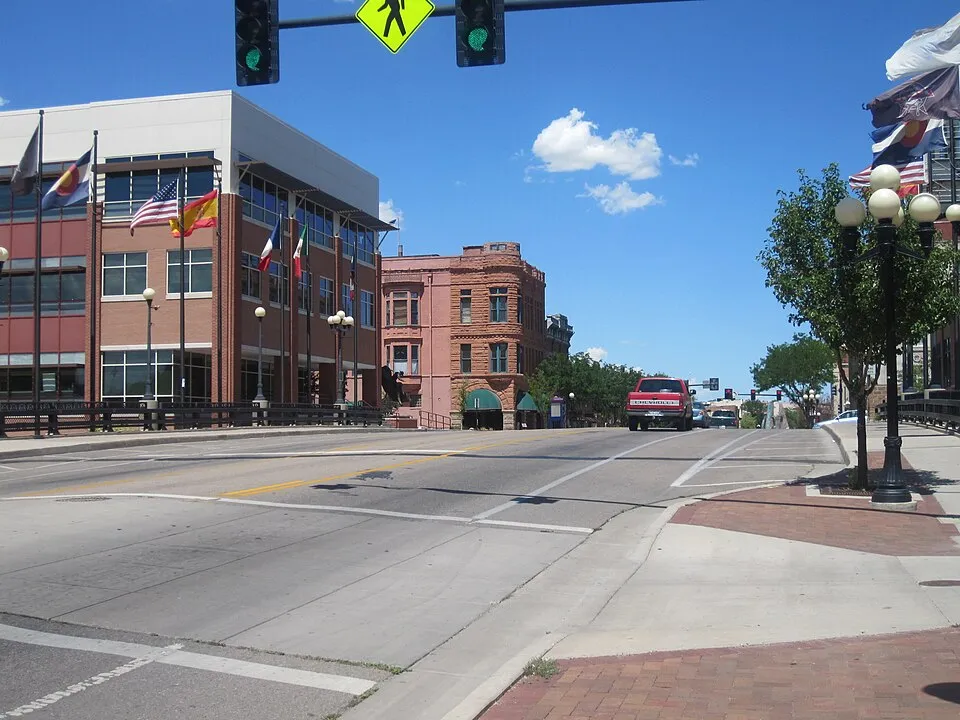
Pueblo County fact sheet for Pueblo homeowners
Housing age, federal disaster declarations and your state's claim deadlines in one place. All three come from public records, county level.
How old are the roofs? Homes in Pueblo County by decade built
| pre-1940 | 15.8% |
|---|---|
| 1940s | 5.2% |
| 1950s | 13.6% |
| 1960s | 9.1% |
| 1970s | 15.5% |
| 1980s | 6.3% |
| 1990s | 13.0% |
| 2000s | 14.4% |
| 2010s | 6.2% |
| 2020+ | 0.8% |
73,031 homes, median built in 1974. 59.3% date from before 1980 and 7.0% from 2010 on; 68.3% are owner-occupied. The most common decade is the pre-1940.
Source: U.S. Census Bureau, American Community Survey · data as of ACS 5-yearWhat to do if your roof was in the hail path
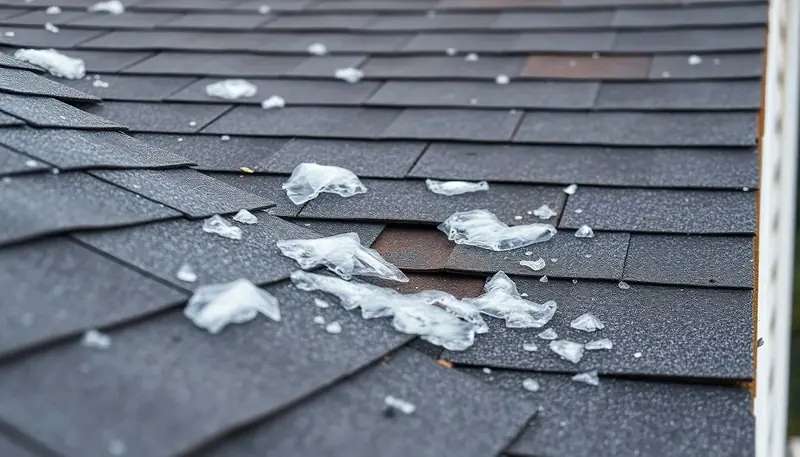
- Read the yard first; stay off the roof. The closest report in the last 90 days sits 2.7 miles from the Pueblo city center (3 WSW Blende, August 19, 2026). Check Pueblo downspouts for granule piles and gutters, vents and screens for dents.
- Document everything before any repair. The log's worst day near Pueblo: September 9, 2026, 2 reports, largest 2.00 in. Pair that date with your dated photos and a coin-for-scale shot to pin the loss to a storm.
- Out-of-town crews will knock; take your time. Near Pueblo, 2 of the 2 hail days reached 1 inch or more, and storm crews canvass within days of storms like that. In Pueblo, do not sign a contract or an Assignment of Benefits at the door; get a written scope from a roofer you picked.
- File on the policy's clock. Last hail day near Pueblo: 46 days ago. Check the policy for your reporting window and file soon, while the log dates are fresh.
- Bring the written scope to the adjuster. A Pueblo estimate stays honest when the adjuster receives your contractor's written scope. Step-by-step: the roof insurance claim guide.
Hail in Pueblo — questions homeowners ask
When did hail last hit Pueblo, CO?
How large was the hail near Pueblo?
Does homeowners insurance cover hail damage in Pueblo?
How often does hail hit the Pueblo area?
How close did hail get to Pueblo in the last 90 days?
Check your own ZIP in Pueblo
The county figures above average over everything inside the county line. For a score tied to your Pueblo address, run your ZIP through the hail risk lookup — Pueblo ZIP codes include 81003, 81004, 81005, 81007, 81027.
Pueblo neighborhoods — hail exposure varies by area
Hail paths track with storm cell movement, not city limits. If you're in East Parkview, Northridge, Hilltop, Downtown Pueblo or University Village, check your specific street against the report locations above — distance from Pueblo's center is listed for each report.
Hail alerts for Pueblo: join the list
We track NOAA hail reports for Pueblo already. Email alerts are not sending yet — leave your address and you'll be on the list when they start. No spam, unsubscribe anytime.
More resources
- Roofing contractors in Pueblo
- Storm damage repair in Pueblo
- Roof repair in Pueblo
- Roof inspection in Pueblo
- Insurance claim guide
- Roof replacement costs in Pueblo
- Emergency roof repair
- All recent hail reports
- Hail risk lookup
Sources: NOAA Storm Prediction Center Local Storm Reports (last 90 days, preliminary) and the NOAA NCEI Storm Events Database (county of the city, 2014–June 2026); U.S. Census Bureau American Community Survey 5-year estimates (housing). The Storm Events archive used here ends in 2025, so storms between that date and the start of the 90-day log are not shown. How we collect data. Are you a roofer in Pueblo? See how requests reach contractors.
How to cite this page
Free to quote with credit, under CC BY 4.0, no permission needed. The numbers are NOAA Storm Prediction Center preliminary reports: unverified, and not confirmed damage to any roof. This is not an official NOAA or NWS product.