Jacksonville, NC · Storm history
Hail Reports in Jacksonville, North Carolina — Last 90 Days
NOAA Storm Prediction Center logged 2 hail reports within 25 miles of Jacksonville across 1 storm day, most recently on September 5, 2026. Source: SPC Local Storm Reports (preliminary, may be revised).
Data as of October 24, 2026 (last successful NOAA check). The newest report in the feed is from Oct 23, 2026. The 90-day log is SPC preliminary data. The county history (2017 to June 2026) is the NOAA Storm Events archive, 2014–June 2026; it has no storms after it ends.
- 1.00 inlargest hail near the city, last 90 days (quarter size)
- 10days with hail 1 in or larger in the county, 2014–June 2026
- 42days with 58+ mph thunderstorm wind, 2014–June 2026
- #158 of 209among the cities we cover, by hail days of 1 in or more
Has hail hit my Jacksonville roof since it was installed?
County-level hail reports for Jacksonville from the NOAA archive this page uses; a county report is not proof of damage at your Jacksonville address.
When does hail hit Jacksonville?
NOAA NCEI Storm Events, county level, 2014–June 2026
If insurance covers it, what do I pay in Jacksonville?
Only if the claim is approved. The ACV math is a straight-line example over a 25-year life; insurers writing Jacksonville policies use their own schedules, so check your policy.
Request Sent!
A local contractor will reach out as soon as they review your request.
Hail near Jacksonville in the last 90 days
- 1.00 inLargest hail in 90 days (quarter size)
- 1Hail day near Jacksonville
- 2SPC reports
- September 5, 2026Most recent event
Around Jacksonville, the NOAA Storm Prediction Center logged 2 hail reports within 25 miles between September 5 and September 5, 2026, spread over 1 storm day. That day brought stones of 1″ or more, and 0 of the 2 Jacksonville reports with coordinates fell within 10 miles of the city center. In a typical year Jacksonville sees about 3 hail-producing storms.
Jacksonville's storm-climate context
Jacksonville sits in coastal North Carolina, exposed to Atlantic hurricane tracks and heavy summer rainfall. The city averages 56.51 inches of rain annually, with August alone delivering 7.48 inches -- a wet season that accelerates shingle aging, promotes moss and algae growth, and stresses flashing seals. A record high of 102 F and record low of -5 F define a wide thermal swing that drives freeze-thaw cycling in winter. Snowfall is negligible at 0.6 inches per year, but hurricane and tropical storm wind uplift is the dominant roofing hazard for Onslow County. Roofs here face UV degradation, wind-driven rain intrusion, and periodic storm replacement demand.
Jacksonville, with 72,723 residents in 2020, has one of the youngest median-age populations among US cities of comparable size, anchored by Marine Corps Base Camp Lejeune and the broader Department of Defense presence. Onslow Memorial Hospital and Onslow County Schools add institutional employment stability. The military-driven population is transient and tenant-heavy, which sustains contractor roofing demand from landlord-owned housing stock and base-adjacent commercial builds.
How close the hail came
Jacksonville's nearest hail report, one of 2, came 19.8 miles from the city center on September 5, 2026 (1.00″ at 4 SE Trenton). September 5, 2026 was the heaviest day around Jacksonville, with 2 reports and a top stone of 1.00″. Stones of 1″ or more came on 1 of the 1 Jacksonville-area hail day.
| Distance from city center | Reports | Largest |
|---|---|---|
| Within 5 miles | 0 | — |
| Within 10 miles | 0 | — |
| Within 25 miles | 2 | 1.00″ |
Distances are straight-line from the city center to each SPC report point; reports without coordinates are left out of the table.
Hail events near Jacksonville by date
September 5, 2026 2 reports, hail up to 1.00″ (quarter size)
| Time (UTC) | Hail size | Location | Distance from Jacksonville |
|---|---|---|---|
| 2139 | 1.00″ | Trenton, Jones County | 22.2 mi |
| 2200 | 1.00″ | 4 SE Trenton, Jones County | 19.8 mi |
The Jacksonville tables above list preliminary Local Storm Reports from the NOAA Storm Prediction Center. Sizes are reported hailstone diameters; times are UTC. Reports can be added or corrected for about a day after each event. A quiet log does not mean no hail: small or unreported events happen. The closest report in this window landed 19.8 miles from Jacksonville's center.
View the 2 Jacksonville-area reports on a map
On the Jacksonville map, circle positions are the NOAA SPC report coordinates; tap a circle for the date and hail size.
Hail size: < 1″ 1–1.75″ ≥ 2″ not recorded
How severe was it? The NWS yardstick, applied to Jacksonville's reports
The National Weather Service calls hail severe at 1″ (quarter size) and significant at 2″ (hen-egg size). Scoring Jacksonville's 2 area reports (filed in Jones County) against that scale: 2 of the Jacksonville reports met the severe 1″+ criterion — the size at which asphalt shingles start taking granule loss and bruising that shows up as leaks a season later. At these sizes, damage on a Jacksonville roof is rarely visible from the ground, and homeowners policies typically cover it when it is documented promptly.
Hail history in Jacksonville: the long picture
County-level NOAA records for the county behind Jacksonville, 2014–June 2026. Each figure shows its source. Storms after the archive ends are not in these numbers. Ranks count from 1, the highest.
Jacksonville against the 209 cities we cover
- #158of 209Days with hail 1 in or larger in Jacksonville: bottom quarter
- #152of 209Days with hail 1.75 in or larger (golf ball) in Jacksonville: middle
- #130of 209Days with 58+ mph thunderstorm wind in Jacksonville: middle
- #126of 209Tornadoes in Jacksonville: middle
- #202of 209Reported storm property damage in Jacksonville: bottom quarter
- #165of 209Share of homes built before 1980 in Jacksonville: bottom quarter
Hail events by year
| 2018 | 5 |
|---|---|
| 2019 | 0 |
| 2020 | 0 |
| 2021 | 0 |
| 2022 | 0 |
| 2023 | 0 |
| 2024 | 4 |
| 2025 | 5 |
Jacksonville's county peaked at 5 events in 2018 and 2025, its busiest full year, out of 14 for 2018 to 2025. In 2018–2025, a 0 means the archive holds no event for that year.
Source: NOAA Storm Events Database, county level, 2018–2025Hail history at a glance
- 14Hail events in the county, since 2017 (NOAA)
- 1.75 inLargest hailstone on record
- Apr 23, 2025Last recorded event in the archive
Hail events in Jacksonville's county, since 2017: 14, or roughly 1 a year, topped by a 1.75″ stone. Set against that baseline, the 1 hail day near Jacksonville in the 90-day window above runs above the long-term average rate. Check your own Jacksonville address on the hail risk lookup.
Jacksonville's county sits right at the North Carolina median of 14 hail events per county since 2017 — average exposure for the state.
Three ways a storm reaches a roof
Hail
Jacksonville's county days with at least one report at that size. Largest stone: 1.75 in.
Source: NOAA Storm Events Database, 2014–June 2026Thunderstorm wind
42 Jacksonville's county days with 58+ mph
58 mph is the NWS severe threshold. Strongest gust on record in Jacksonville's county: 81 mph on Apr 13, 2020.
Source: NOAA Storm Events Database, 2014–June 2026Tornadoes
6 in Jacksonville's county
Strongest tornado in Jacksonville's county: EF1 on the Enhanced Fujita scale.
Source: NOAA Storm Events Database, 2014–June 2026Peak storm month
June
In Jacksonville's county, 25 of 122 hail, wind and tornado reports (20%) fell in June.
Source: NOAA Storm Events, 2014–June 2026Older homes
36.9% of Jacksonville homes built before 1980
About 10,000 of Jacksonville's 25,768 housing units (share times units, rounded). Median year built: 1992. Housing units, not roofs: many Jacksonville homes have been re-roofed since.
Source: Census ACS (Jacksonville city), 2019–2023Year-by-year table with the largest stone
| Year | Recorded hail events | Largest stone |
|---|---|---|
| 2025 busiest largest stone | 5 | 1.75″ |
| 2024 | 4 | 1.00″ |
| 2018 busiest | 5 | 1.50″ |
NOAA Storm Events archive, Jacksonville's county. Years missing from the table have no record in the archive. * 2026 covers only January to June: NOAA's file ends there, so it is not counted as the worst year or in the yearly average.
2025 was the standout hail year in Jacksonville's county on both counts: the most recorded events (5) and the largest stone (1.75″).
In a market with repeat hail, impact-resistant Class 4 shingles often pay for themselves through insurer premium discounts — worth discussing with a Jacksonville roofer if a recent event tips you into a replacement.
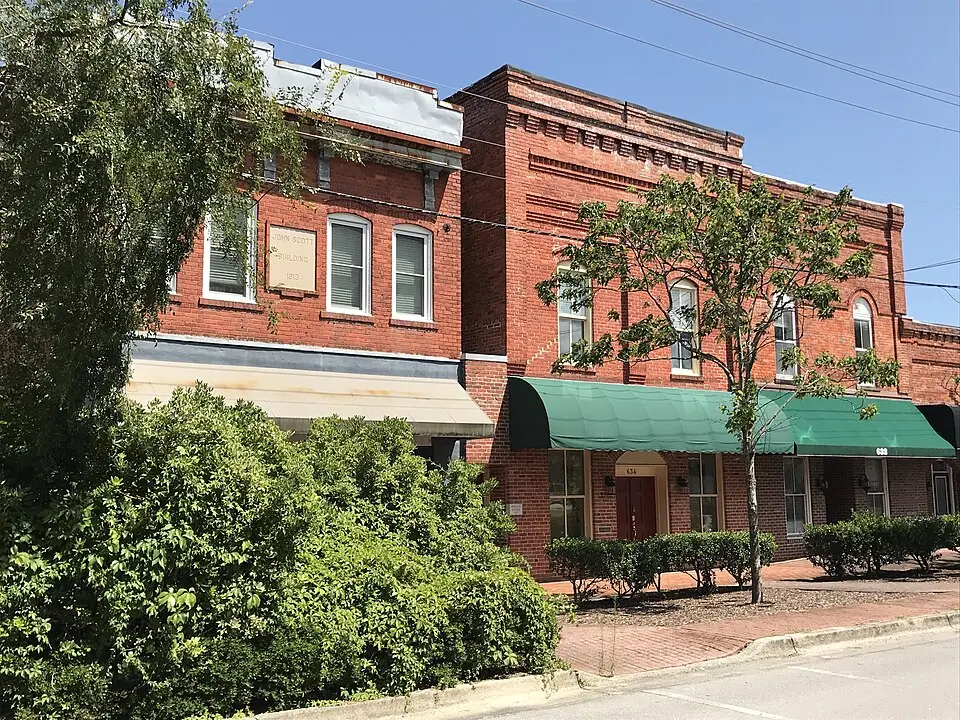
Onslow County fact sheet for Jacksonville homeowners
Housing age, federal disaster declarations and your state's claim deadlines in one place. All three come from public records, county level.
How old are the roofs? Homes in Onslow County by decade built
| pre-1940 | 0.6% |
|---|---|
| 1940s | 2.0% |
| 1950s | 5.6% |
| 1960s | 6.7% |
| 1970s | 11.0% |
| 1980s | 13.5% |
| 1990s | 14.7% |
| 2000s | 20.5% |
| 2010s | 22.8% |
| 2020+ | 2.5% |
85,917 homes, median built in 1997. 26.0% date from before 1980 and 25.3% from 2010 on; 61.0% are owner-occupied. The most common decade is the 2010s.
Source: U.S. Census Bureau, American Community Survey · data as of ACS 5-yearWhat to do if your roof was in the hail path
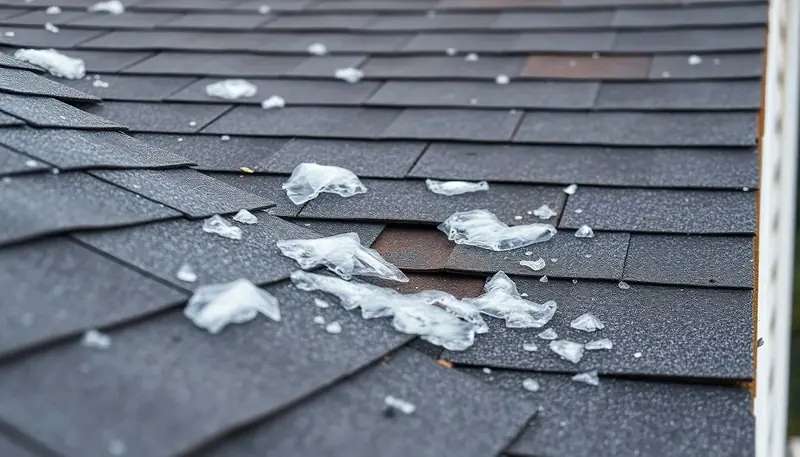
- Walk the ground, not the roof. Hail came as near as 19.8 miles to Jacksonville (4 SE Trenton, September 5, 2026) in the last 90 days. Granule piles under a Jacksonville downspout and dents on gutters, vents and screens are the signs to look for.
- Record the damage before anyone repairs it. The log's worst day near Jacksonville: September 5, 2026, 2 reports, largest 1.00 in. Pair that date with your dated photos and a coin-for-scale shot to pin the loss to a storm.
- Book a free inspection rather than guessing. The single hail day near Jacksonville reached 1 inch or more. Nobody on a Jacksonville lawn can see bruised shingles or lost granules, so a written scope from a roofer is the test for a claim.
- File on the policy's clock. Last hail day near Jacksonville: 50 days ago. Check the policy for your reporting window and file soon, while the log dates are fresh.
- Bring the written scope to the adjuster. Hand over the scope in writing: an adjuster working a Jacksonville claim then has the contractor's numbers. Step-by-step: the roof insurance claim guide.
Verified roofing contractors in Jacksonville
Contractors PickARoofer has already verified in Jacksonville. A badge on a Jacksonville contractor means we confirmed an active license or registration in a public registry. Ask any Jacksonville roofer for a current certificate of insurance before signing.
Hunt Riggs Roofing
VerifiedJ & T Siding Inc
VerifiedPRQ Exteriors
VerifiedHail in Jacksonville — questions homeowners ask
When did hail last hit Jacksonville, NC?
The most recent NOAA hail report within 25 miles of Jacksonville is from September 5, 2026, with hail up to 1.00″.
How large was the hail near Jacksonville?
The largest hailstone reported near Jacksonville in the last 90 days measured 1.00″ — about quarter size. Jacksonville had 1 hail day of 1″ or more, the size where asphalt shingles start to bruise; the biggest came on September 5, 2026.
Does homeowners insurance cover hail damage in Jacksonville?
The latest hail day near Jacksonville was September 5, 2026, 50 days ago, a date a claim can point to. Standard homeowners policies generally cover sudden storm damage and not gradual wear. For a Jacksonville claim, document the damage before repairs, keep this NOAA log as proof of the September 5, 2026 event date, and read your own policy for its filing deadline: the policy sets that window, not a universal rule.
How often does hail hit the Jacksonville area?
In Jacksonville's county, NOAA's archive since 2017 shows 14 recorded hail events. Jacksonville averages about 1 a year, and its biggest stone on record measured 1.75″.
How near to Jacksonville did the nearest hail report fall?
On September 5, 2026, 19.8 miles from the Jacksonville city center, 1.00 in. at 4 SE Trenton: that is the nearest SPC report of the last 90 days.
Check your own ZIP in Jacksonville
The county figures above average over everything inside the county line. For a score tied to your Jacksonville address, run your ZIP through the hail risk lookup — Jacksonville ZIP codes include 28540, 28541, 28567, 28555, 28545.
Jacksonville neighborhoods — hail exposure varies by area
Hail paths track with storm cell movement, not city limits. If you're in Old Town Jacksonville, Northside, Southside, West End or Downtown, check your specific street against the report locations above — distance from Jacksonville's center is listed for each report.
Hail alerts for Jacksonville: join the list
We track NOAA hail reports for Jacksonville already. Email alerts are not sending yet — leave your address and you'll be on the list when they start. No spam, unsubscribe anytime.
✓ You're on the list — alerts start when we launch email notifications.
More resources
- Roofing contractors in Jacksonville
- Storm damage repair in Jacksonville
- Roof repair in Jacksonville
- Roof inspection in Jacksonville
- Insurance claim guide
- Roof replacement costs in Jacksonville
- Emergency roof repair
- All recent hail reports
- Hail risk lookup
Sources: NOAA Storm Prediction Center Local Storm Reports (last 90 days, preliminary) and the NOAA NCEI Storm Events Database (county of the city, 2014–June 2026); U.S. Census Bureau American Community Survey 5-year estimates (housing). The Storm Events archive used here ends in 2025, so storms between that date and the start of the 90-day log are not shown. How we collect data. Are you a roofer in Jacksonville? See how requests reach contractors.
Free hail inspectionOne local roofer calls youGet quote
How to cite this page
Free to quote with credit, under CC BY 4.0, no permission needed. The numbers are NOAA Storm Prediction Center preliminary reports: unverified, and not confirmed damage to any roof. This is not an official NOAA or NWS product.